
Service Overview
Synthetic Turf Maintenance in North Richland Hills, TX
Professional Synthetic Turf Maintenance in North Richland Hills, TX.
Synthetic turf performs differently in North Texas heat than in cooler markets. The planning decisions that matter most—infill selection, drainage spec, fiber weight—need to be calibrated for Tarrant County conditions, not generic assumptions. In Hometown NRH subdivisions, we work within HOA landscape guidelines and coordinate with adjacent property grades to ensure drainage behaves as intended across property lines.
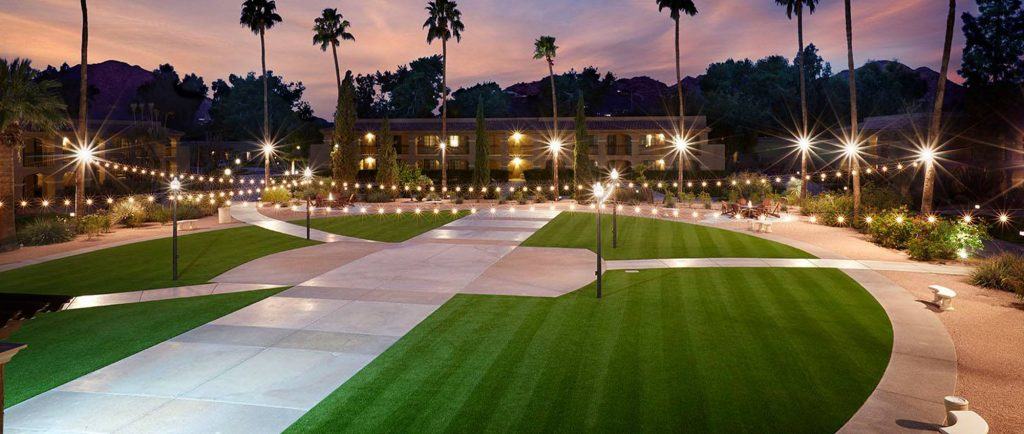
For synthetic turf maintenance in North Richland Hills, we scope around high-traffic commercial turf at Loop 820 retail properties, NE Tarrant Chamber venue landscapes, and residential turf in Hometown NRH neighborhoods with HOA appearance standards—keeping consistent surface performance and appearance standards maintained through both North Texas summer heat cycles and winter dormancy periods as the primary performance target throughout the project.
Commercial properties along Davis Boulevard and the Loop 820 corridor that serve the NE Tarrant Chamber business community maintain higher landscape appearance standards than typical residential turf. Scheduled maintenance is a practical necessity for these accounts. A common failure point in this service category is ignoring infill compaction and blade matting until appearance degrades noticeably, at which point restoration requires more intervention than routine grooming would have needed. Crew sequencing is designed to protect finish consistency across NRH's variable weather windows—especially the spring storm periods that compress scheduling.
Turf Installation of North Richland Hills works across the full NE Tarrant service area—from Hometown NRH and TCC-NE corridor residential properties to Loop 820 commercial frontage and Iron Horse Golf Course adjacent sites. Every project plan is built around the specific conditions of the property, not a packaged template.
The NRH municipal complex and NE Tarrant Chamber business community have established landscape appearance standards that commercial properties in the Davis Boulevard and Loop 820 corridors are expected to maintain. We work within those standards while building for practical long-term performance across North Texas weather cycles.
Where This Work Delivers Value
NRH Property Fit
Best suited for high-traffic commercial turf at Loop 820 retail properties, NE Tarrant Chamber venue landscapes, and residential turf in Hometown NRH neighborhoods with HOA appearance standards. We calibrate scope to NRH's mix of new-construction Hometown lots, established mid-cities residential streets, and Loop 820 commercial corridor properties.
Tarrant County Site Strategy
We define prep depth, drainage approach, and install sequencing based on Tarrant County clay soil behavior and North Texas heat exposure—before production starts, not after problems surface.
Risk Control for NRH Conditions
We address ignoring infill compaction and blade matting until appearance degrades noticeably, at which point restoration requires more intervention than routine grooming would have needed early—particularly on the new-development sites near TCC-NE and Hometown NRH where builder rough-grade profiles are often not final-ready for direct turf installation.
Project Benefits
Clear Scope Before Installation Day
Defined materials, drainage plan, and sequence decisions reduce surprises once crews mobilize—especially important for Loop 820 commercial properties operating through installation.
Calibrated for North Texas Conditions
Turf specification and infill selection account for Tarrant County summer heat, UV exposure, and clay soil drainage cycles rather than generic product defaults.
Finish Detail That Matches NRH Standards
Edge transitions, seam placement, and perimeter work are treated as quality-critical elements, not punch-list items—meeting the appearance expectations of Hometown NRH HOA communities and Loop 820 commercial tenants.
Execution Process
- 01
Site Assessment
We inspect drainage grade, clay soil conditions, access routing, and HOA or commercial appearance requirements to set project direction for the specific NRH property.
- 02
Scope and Material Alignment
Materials, base prep requirements, and install sequencing are matched to Tarrant County site conditions, your timeline, and the appearance standards of surrounding properties.
- 03
Installation and Detailing
Crew execution covers sub-base prep, turf placement, seam control, infill calibration, and edge detailing—with active quality checks at each transition point.
- 04
Final Review and Care Guidance
We walk through completed surface quality, provide North Texas-specific care guidance, and flag any follow-up recommendations for long-term performance through heat and storm cycles.
Frequently Asked Questions
How long does synthetic turf maintenance typically take for a North Richland Hills property?
Timeline depends on project size, base prep complexity, and site access. New-construction lots near TCC-NE and Hometown NRH often require more prep time than established addresses. After a field assessment, we provide a practical schedule window rather than a generic estimate.
Do you work in Hometown North Richland Hills and other NRH master-planned neighborhoods?
Yes. We work throughout Hometown NRH, Northridge Estates, Heatherwood, and the TCC-NE corridor neighborhoods, as well as commercial properties along Loop 820, Davis Boulevard, and the Iron Horse Golf Course corridor.
Can this service be bundled with drainage or other turf work?
Yes. Many NRH properties combine installation, drainage system work, and ongoing maintenance in a single project scope to maintain quality consistency across the entire surface—especially important for HOA community lots and Loop 820 commercial frontage.
Do you work with commercial property managers along the Loop 820 corridor?
Yes. We work with commercial property managers, NE Tarrant Chamber business members, and retail center operators along the Loop 820 and NorthEast Mall trade area. Scope and scheduling are adjusted to minimize impact on business operations.